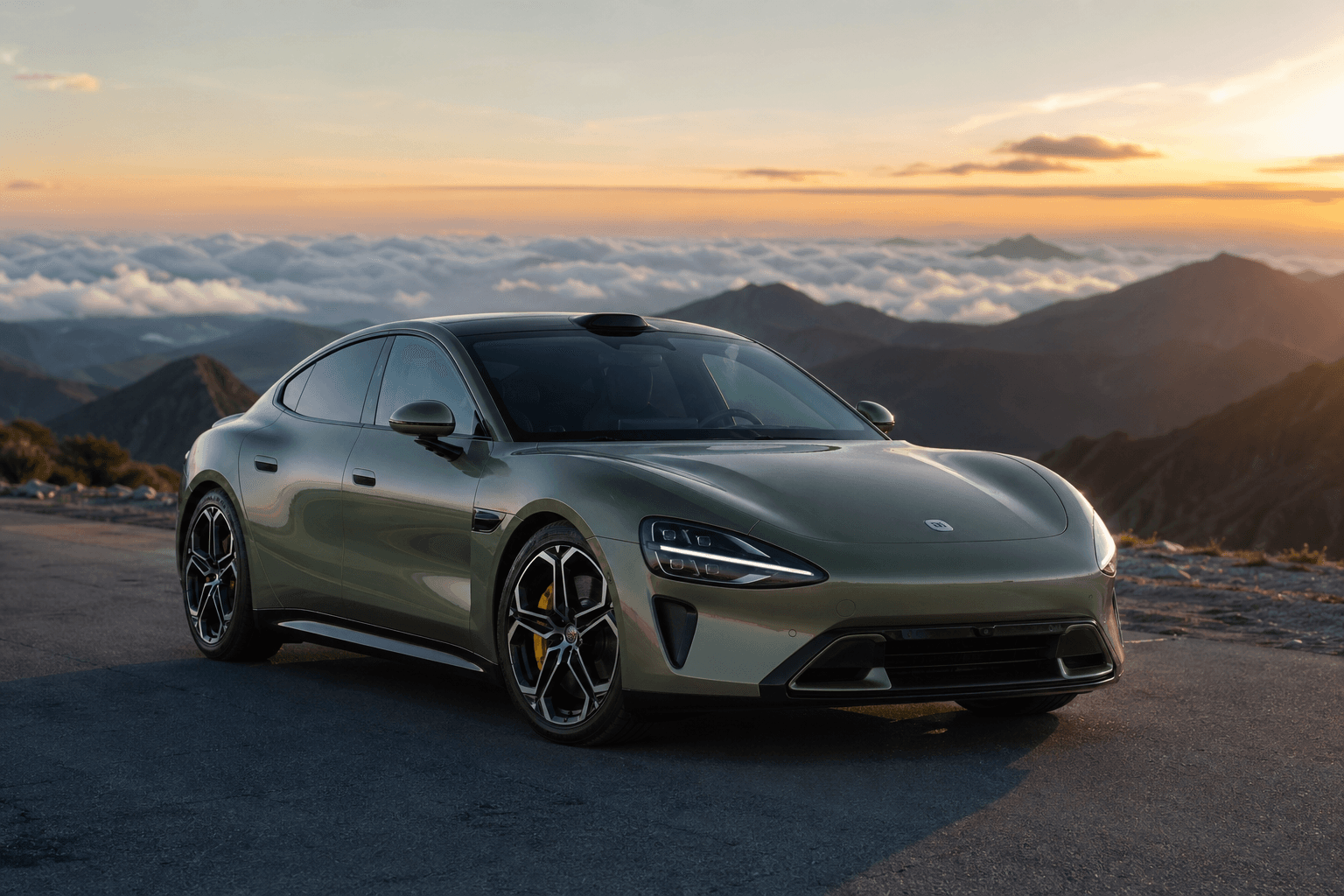
The first time you launch the Xiaomi SU7, it doesn’t creep forward like most EVs—it lunges. Not violently, not Tesla “neck-snap for the sake of it,” but with this eerily precise surge, like a fighter jet rolling down a runway under full control. The steering is lighter than I expected, but there’s a crispness to it, a digital sharpness that somehow translates into real-world confidence. And then you notice the silence—not empty, but engineered. This thing doesn’t just move. It feels curated.
Here’s the bold truth after real seat time: the Xiaomi SU7 review isn’t about a flashy new EV—it’s about a company that understood the assignment better than most legacy automakers. This is absolutely worth your money if you value tech and performance in equal measure. But—and this is important—it’s not the driver’s car benchmark yet. It’s something else entirely.
Xiaomi didn’t just build a Tesla Model 3 rival. They built a statement. And in doing so, they’ve forced every Western automaker to look over their shoulder and ask a very uncomfortable question: how did a smartphone company get this good, this fast?
Key Specs
- Starting Price: $30,000 (China equivalent)
- Engine: Dual Electric Motors (Performance trim)
- Power: Up to 664 hp / 619 lb-ft
- 0-60 mph: 2.78 seconds (Max version)
- Fuel Economy: ~500–800 km range (CLTC)
- Transmission: Single-speed
- Drivetrain: RWD / AWD
Design & First Impressions
Walk up to the SU7 and your brain does a double take. Porsche Taycan proportions, McLaren-ish nose, and a rear that screams “we studied every fast sedan ever made.” It’s not original in the purest sense—but it’s executed so cleanly that you stop caring.
The stance is what hooks you. Long wheelbase, low hood, wide shoulders—it looks planted before it even moves. Unlike Tesla’s minimalist “blob” approach, Xiaomi leaned into drama. The flush door handles pop with a soft electric whirr, and the LED light signature is crisp enough to slice through fog like a scalpel.
Hot take: this is one of the best-looking electric sedans on the road right now. Yes, better than the Model 3. Yes, more cohesive than the Hyundai Ioniq 6. It feels like a car designed by enthusiasts, not a committee chasing efficiency scores.
Interior & Technology
Slide inside and the first thing you notice is the smell—clean leather, a hint of synthetic trim, and that new-car tech aroma that screams “this thing runs more code than a startup.” The seating position is low and sporty, with a steering wheel that feels properly thick—not that over-padded nonsense some EVs use to fake sportiness.
The centerpiece is a massive 16.1-inch display running Xiaomi’s HyperOS. And here’s where things get interesting: it’s fast. Not “car fast.” Phone fast. Zero lag, crisp animations, and seamless integration with Xiaomi devices. If you’re already in their ecosystem, it’s borderline spooky how well everything syncs.
Compared to Tesla’s interface—which, despite updates, can still feel like a science project—the SU7 is more intuitive. Menus make sense. Controls are where your brain expects them to be. It’s the difference between a tech demo and a finished product.
Rear passengers get proper space—this isn’t a “compromise sedan.” There’s generous legroom (thanks to that long wheelbase) and a clean, airy cabin. Materials? Not quite BMW i5 M60 levels of richness, but close enough to raise eyebrows. Speaking of which, check out BMW’s 600-hp electric sedan—that’s still the benchmark for luxury feel.
Behind the Wheel: Driving Experience
Alright—this is where I get picky.
The acceleration is outrageous. The dual-motor Max version hits 60 mph in under 3 seconds, and it feels like being pulled by an invisible cable. No drama, no wheelspin, just relentless forward thrust. It’s brutally effective—but almost too clean. Like a video game with the physics turned slightly down.
Steering is precise, but it lacks the organic feedback you get in something like a BMW or even a well-tuned Hyundai EV. It’s accurate, sure—but it doesn’t talk to you. It whispers when it should be shouting.
The chassis, though? That’s the surprise. Xiaomi didn’t cheap out here. Double wishbone up front, multi-link rear, adaptive air suspension on higher trims—it actually holds a line through corners with real composure. You can feel the weight (around 4,800 lbs), but it’s controlled, disciplined.
Brake modulation is solid—progressive and predictable—but not quite sports-sedan sharp. There’s a hint of that EV “synthetic feel” under hard braking. Not bad, just not Porsche-level confidence.
Ride quality is where it shines. In Comfort mode, it glides—soaks up bumps like a luxury cruiser. Switch to Sport, and it tightens without becoming punishing. This is where Xiaomi nailed it: daily usability with just enough edge.
Compared to the latest Tesla tuning, the SU7 feels more refined, less jittery over rough roads. It’s a better long-distance companion, no question.
Fuel Economy & Running Costs
Range claims are strong—up to 800 km (CLTC), which realistically translates to around 400–450 miles in ideal conditions. Real-world? Expect closer to 320–360 miles depending on how heavy your right foot is.
Efficiency is competitive with the Tesla Model 3 Long Range, and charging speeds are impressive. Xiaomi claims ultra-fast charging capability, though infrastructure outside China will be the real test.
Running costs should be low—typical EV story. Fewer moving parts, minimal maintenance. But here’s the catch: long-term reliability is still a question mark. Xiaomi hasn’t been building cars for decades like Toyota or BMW.
For official efficiency comparisons, check FuelEconomy.gov—though SU7 data is still limited globally.
Practicality & Daily Living
This is where the SU7 quietly wins people over.
Trunk space is solid (around 17 cubic feet), plus a front trunk for cables and small bags. The rear seats fold flat, giving you flexibility Tesla owners will find familiar.
Visibility is decent for a low sedan, though the sloping roofline does compromise rear sightlines slightly. Thankfully, the camera system is excellent—sharp, responsive, and actually useful.
Daily usability? Easy. The software works, the ride is comfortable, and the cabin feels like a place you’d want to spend time. This isn’t a weekend toy—it’s a proper daily driver.
One caveat: service network. Outside China, it’s still developing. That’s something Tesla solved years ago—and something Xiaomi needs to prove quickly.
If you’re concerned about safety standards, always check recalls and ratings via NHTSA.gov.
How It Stacks Up: Competitive Comparison
The obvious rival is the Tesla Model 3. Tesla still wins on charging infrastructure and brand trust, but the SU7 beats it in interior quality, ride comfort, and—arguably—design.
Against the Hyundai Ioniq 6, the Xiaomi feels more premium and more powerful. The Hyundai is efficient and quirky; the SU7 is confident and polished.
Then there’s the BMW i5. Different price bracket, sure—but it highlights where Xiaomi still trails. BMW delivers superior steering feel and driver engagement. The SU7 counters with better tech integration and value.
Here’s the spicy take: the SU7 is the most complete “tech-first” sedan right now. Not the best driver’s car. Not the most luxurious. But the best blend of modern expectations.
The Good
- Stunning design with real road presence
- Blistering acceleration (sub-3-second 0-60)
- Best-in-class infotainment responsiveness
- Comfortable, well-tuned suspension
- Strong value proposition vs competitors
The Bad
- Steering lacks true feedback
- Brand reliability still unproven
- Limited global service network
- Design borrows heavily from others
The Xiaomi SU7 isn’t perfect—but it doesn’t need to be. It’s disruptive in the way the original Model S was: not because it beat everyone at everything, but because it rewrote what buyers expect.
And here’s the part legacy automakers won’t like: this is Xiaomi’s first real shot. If this is where they start, imagine where they’ll be in five years. The EV game just got a lot more interesting—and a lot more competitive.
Disclosure: This article may contain affiliate links. If you make a purchase through these links, we may earn a small commission at no extra cost to you. This helps support RevvedUpCars.com. Learn more.