Here’s a fun January fact: cold weather can rob your car battery of up to 40% of its power, which is why your neighbor’s BMW X5 sounds like it’s gargling gravel at 6 a.m. This is exactly why a proper winter driving checklist isn’t just for overcautious types in Subarus—it’s survival gear. I’ve driven everything from a Toyota RAV4 Hybrid to a Ford F-150 Tremor in whiteout conditions, and winter doesn’t care about your badge or your ego.
January cold snaps are brutal because they arrive when your car is already tired from holiday miles and neglected maintenance. Fluids thicken, tire pressures plummet by about 1 PSI for every 10°F drop, and suddenly that “all-season” confidence feels like corporate optimism. If you value traction, reliability, and not starring in a dashcam fail compilation, this checklist matters right now.
Think of this as the pub-napkin version of a factory service manual, minus the legalese and plus a few strong opinions. Follow this winter driving checklist, and you’ll laugh at snowstorms the way a Subaru Outback owner laughs at lifted trucks on summer tires.
Why a Winter Driving Checklist Matters in January
January is when cold weather car prep stops being theoretical and starts being expensive. AAA reports battery-related breakdowns spike by roughly 30% during extreme cold, and that’s before we talk about frozen door seals and washer fluid that turns into a slushy. Winter exposes lazy maintenance faster than Doug DeMuro finds weird cupholders.
Modern cars—whether it’s a 2025 Honda CR-V, a 2026 Tesla Model Y, or a Chevy Tahoe—are packed with electronics that hate voltage drops. Ignore winter prep, and your fancy driver assists may switch off faster than traction control in a Mustang Cars & Coffee video.
1. Test Your Battery Like You Mean It
If your battery is over four years old, January is basically its final exam. Cold cranking amps matter, and a weak battery can lose nearly half its output at 0°F. Most auto parts stores will test it for free, which is cheaper than a tow.
EV owners aren’t off the hook either—cold can slash range by 20–30%. Bookmark this guide on protecting car battery health and EV range in winter before you blame physics on Elon.
2. Tires: The Only Thing Between You and a Ditch
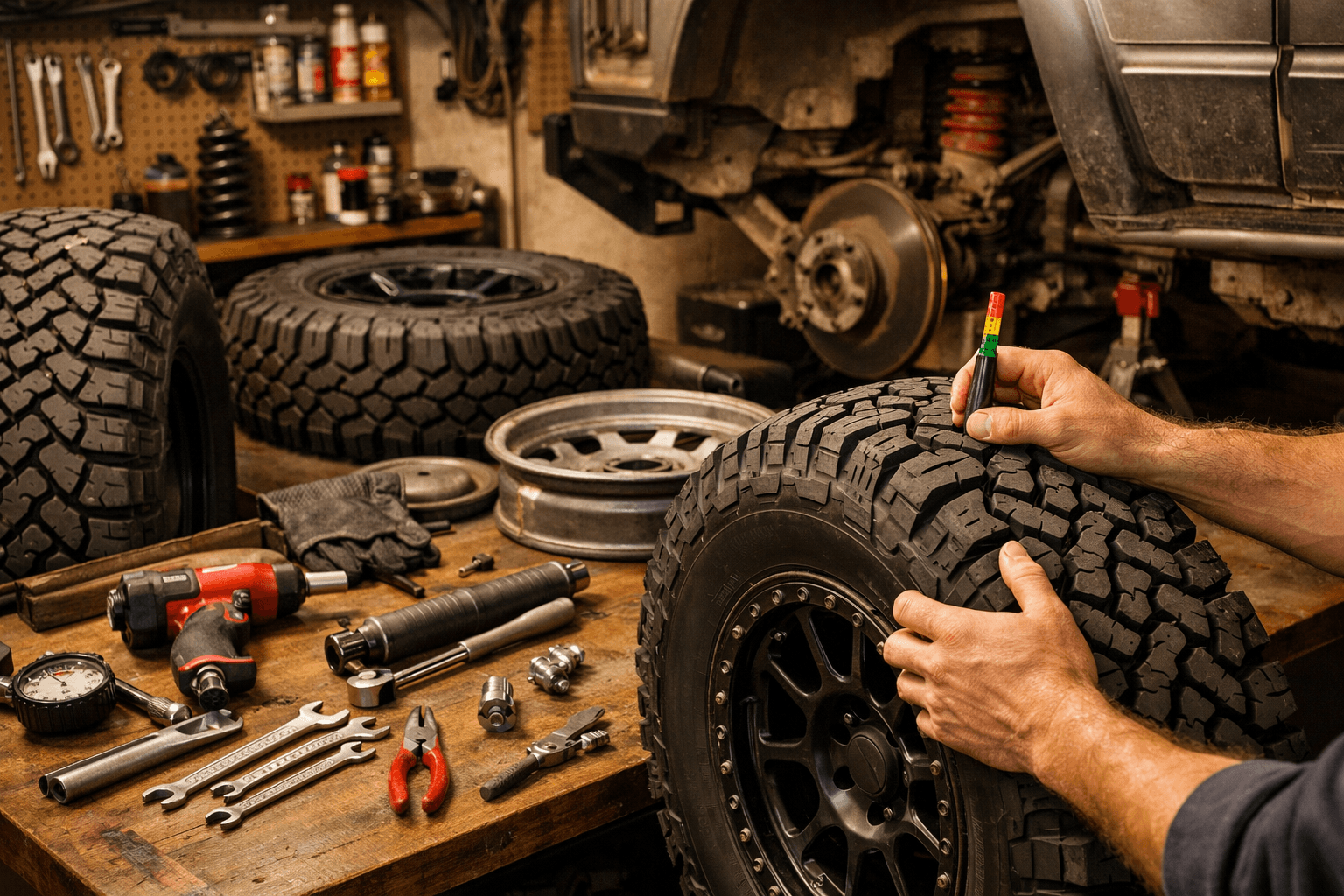
Here’s my controversial hot take: AWD on bad tires is worse than FWD on good winter rubber. A proper set of snow tires can reduce stopping distances on ice by up to 30%, which is the difference between smug braking and swapping insurance details.
If you’re still confused, read our snow tires guide and stop pretending “M+S” is a personality trait. Michelin X-Ice, Bridgestone Blizzak, and Nokian Hakkapeliitta make even a humble Mazda CX-5 feel heroic.
3. Check Tire Pressure Weekly, Not Seasonally
That TPMS light isn’t a suggestion. For every 10°F temperature drop, tires lose about 1 PSI, which murders fuel economy and grip. Most cars want 32–35 PSI; check your door jamb like a responsible adult.
Underinflated tires turn steering response lazier than a cat in a sunbeam. Chris Harris would not approve.
4. Fluids: Winter Is Not the Time for Guesswork
Washer fluid rated to -20°F is non-negotiable unless you enjoy driving blind behind salt trucks. Engine oil matters too—modern 0W-20 flows better in the cold than thicker grades, improving cold starts and MPG.
Coolant should be a 50/50 mix, protecting down to roughly -34°F. If you don’t know what’s in there, a $5 tester beats a cracked engine block.
5. Lights and Wipers: See and Be Seen
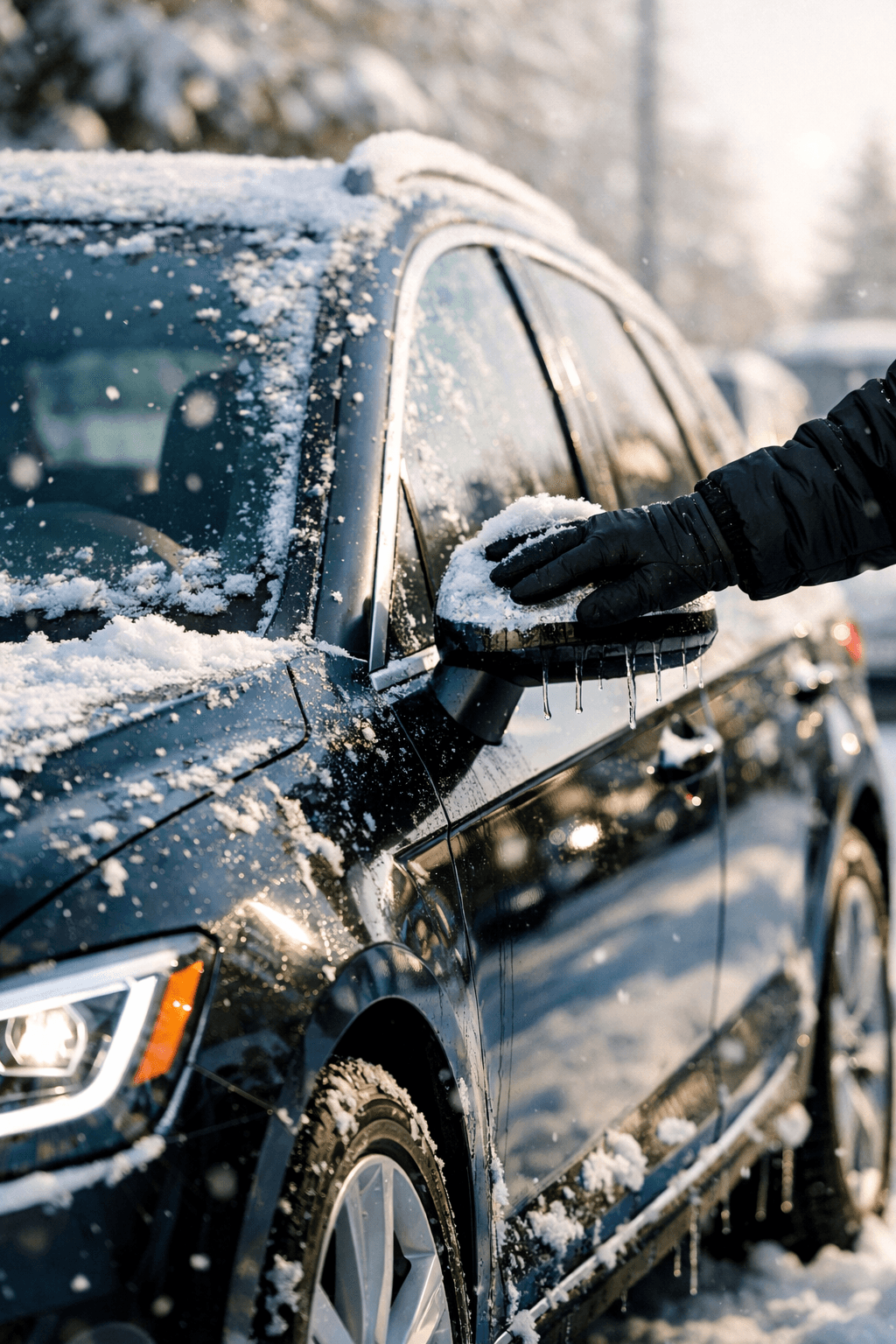
Winter driving is 50% visibility and 50% prayer. Replace wiper blades annually, preferably with winter-specific ones that resist ice buildup. LED headlights are bright, but they don’t generate heat, so clear them manually.
Pro tip: clean your taillights weekly. Slush can turn your brake lights into vague red suggestions.
6. Brakes and ABS: Your Last Line of Defense
If your brake pedal pulses under hard stops, that’s ABS doing its job, not a reason to panic. But worn pads and rusty rotors reduce effectiveness, especially in wet snow.
NHTSA data shows winter crashes spike due to longer stopping distances—check safety resources at NHTSA.gov if you enjoy sobering statistics.
7. Emergency Kit: Cheap Insurance
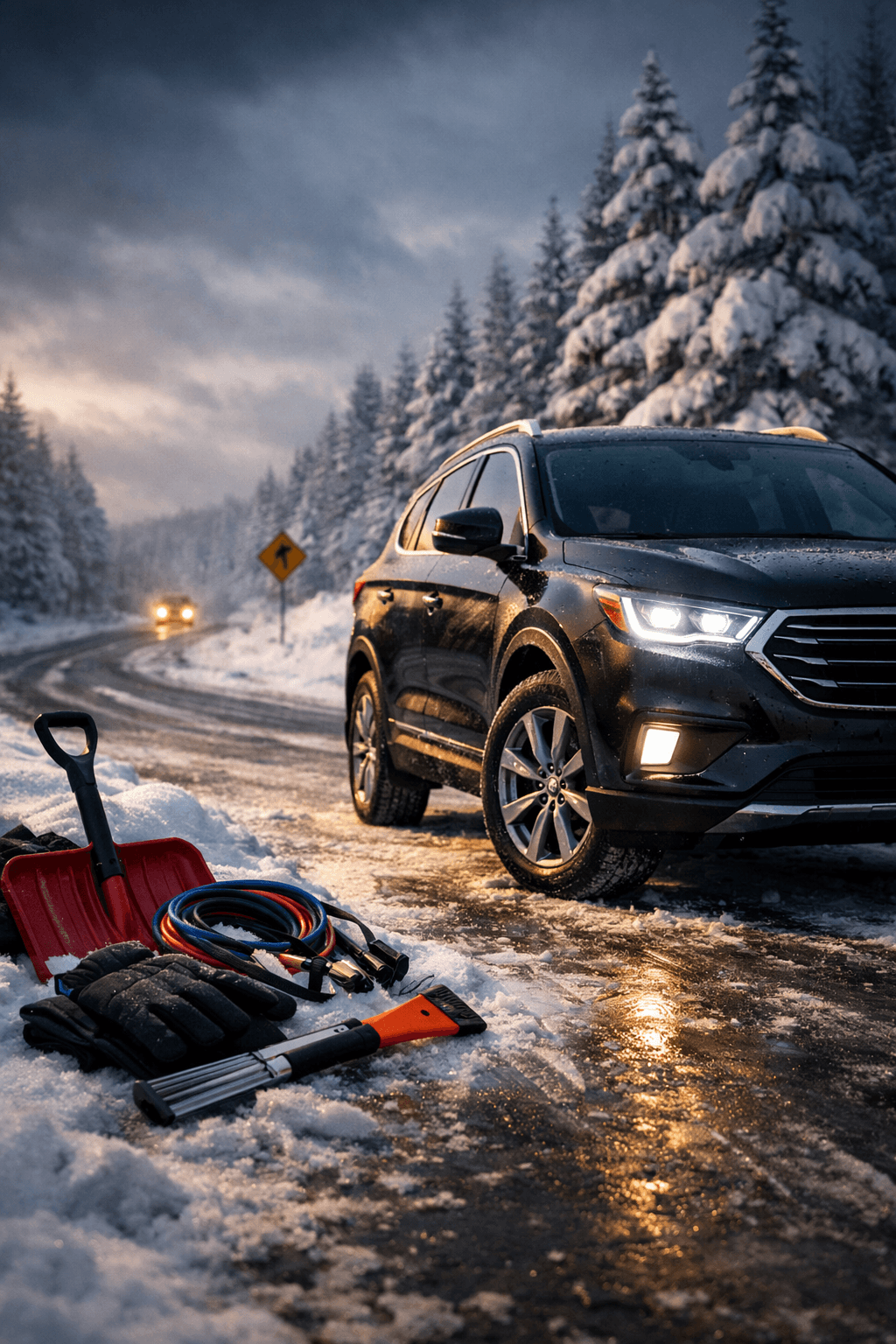
A $50 kit can save your sanity: jumper cables, gloves, blanket, flashlight, and a phone charger. Add traction aids if you live somewhere serious, like Minnesota or the part of Canada Top Gear pretends doesn’t exist.
Keep at least half a tank of fuel; condensation is real, and gas stations aren’t guaranteed during storms.
8. Drivetrain Reality Check
AWD helps you go, not stop. I don’t care if you’re in a Subaru Forester, Audi Q5, or Toyota Land Cruiser—tires and driver inputs matter more.
If you want the nerdy breakdown, read our AWD vs FWD winter guide and recalibrate your confidence.
9. Software Updates and Driver Assists
Modern cars from Tesla, Hyundai, and Ford rely on software for traction control and stability systems. Check for updates, because a buggy calibration in snow is like skiing with loose boots.
Lane-keep assist often struggles with snow-covered markings—turn it off before it fights you mid-corner.
10. Practice, Don’t Panic
Find an empty snowy lot and practice controlled braking and gentle slides. Understanding how your car reacts builds muscle memory faster than any YouTube tutorial.
This final step ties the entire winter driving checklist together: prep the machine, then prep the driver.
Pros
- Improves safety and confidence immediately
- Reduces winter breakdown risk significantly
- Saves money on repairs and insurance claims
- Applies to gas, hybrid, and EVs
Cons
- Requires upfront time and minor expense
- Winter tires need storage space
- Forces you to confront neglected maintenance
Ignore winter prep and you’re gambling against physics, which always wins. Follow this winter driving checklist, and January becomes less of a threat and more of a flex—because the real car enthusiast isn’t the loudest, it’s the one who still makes it home when the snow hits sideways.